
Are Titanium Earrings Good for Everyday Wear?
Quick Answer
Yes — titanium earrings are a strong choice for daily wear because of their material properties, not just their style. Implant-grade titanium combines low weight, strength and high corrosion resistance, making it a useful foundation for an everyday pair or a fuller ear stack.
For lasting comfort, check the complete earring: its material, finish, size and closure. Titanium is low-maintenance rather than maintenance-free, and even a well-made piece needs to suit your piercing and daily activities.
Why Most Earrings Fail the Daily Wear Test
Daily earring wear can involve familiar trade-offs. Sterling silver can tarnish, a plated finish can wear, and some white-gold alloys contain nickel that does not suit a nickel-sensitive wearer. A bulky or overly tight backing can also feel uncomfortable when it presses against the skin.
The result is a pair you like looking at but do not enjoy wearing for long. Titanium can help with the material side of that problem; the finished design still needs to work with your routine.
-
Material
Look beyond the gold or silver color. Check the metal touching your skin and the finish applied over it.
-
Weight
Consider the whole earring, including its stones and drops. A balanced stack should feel comfortable as well as look coordinated.
-
Fit
Post length, hoop diameter and the shape of the backing all affect how a piece sits. The right metal cannot compensate for a poor fit.
Scratch Resistance: Why Titanium Earrings Hold Up
Implant-grade titanium offers strength in a lightweight material, but scratch resistance is not the same as being scratch-proof. Repeated contact with abrasive surfaces, other jewelry or equipment can leave fine marks on an earring or its decorative finish.
Sterling silver and gold can also develop surface marks. Exact hardness depends on the alloy, processing and finish, so a single hardness number does not predict how every finished earring will look after daily wear.
Surface condition matters. Check posts, hinges and backs for roughness or damage, and handle delicate details gently rather than assuming a strong base metal makes them indestructible.
Structural Integrity Over Years
Ti-6Al-4V ELI, the alloy associated with ASTM F136, is valued for its strength and fatigue performance. Supplier data gives typical ultimate tensile strengths of roughly 860–900 MPa for several annealed conditions. These are material-test figures, not a guarantee that an earring cannot bend or break.
A finished piece also depends on its thickness, joints, settings and closure. Avoid forcing a clasp or bending a post, and check that the backing remains secure. Good handling helps protect the parts that do the daily work: the post, the setting and the closure.
Weight: The Overlooked Comfort Factor
Titanium is remarkably lightweight compared with the other common jewelry metals discussed here. Approximate density figures help explain why:
- Titanium alloyTi-6Al-4V ELI: approximately 4.43 g/cm³.
- Pure goldApproximately 19.3 g/cm³. This is not the density of every 14K gold alloy.
- Pure silverApproximately 10.5 g/cm³. Sterling silver is an alloy and differs slightly.
- SteelRoughly 8 g/cm³, depending on the specific grade.
Density compares equal volumes of metal, not whole earrings. A larger titanium design with stones may still weigh more than a very small gold earring, so consider size and construction alongside material.
Why it matters for earrings
- Larger studs, hoops and statement drops can pull downward or feel uncomfortable when the complete piece is heavy.
- With several piercings, assess the combined weight instead of judging each earring in isolation.
- A lighter base metal gives you more scope to add shape and movement without relying on a bulky design.
The graduated hoops in Zenith, pictured earlier, show how a stack can taper as it moves up the ear. For a pavé alternative, Vale pairs smaller gem hoops with a kite-shaped drop at the lobe.
Build your everyday stack gradually
Begin with a pair that feels comfortable in your healed lobes, then add supporting hoops or studs. Keep enough space between pieces and choose their size around the piercings you already have.

Vale Earring Stack
- MaterialSolid implant-grade titanium
- Set8 earrings; graduated gem hoops and kite drops
- ClosureTraditional hoops
Vale carries its most noticeable detail at the first lobe, with smaller pavé hoops continuing upward. The gold version uses an 18k gold PVD finish; the silver version uses rhodium. Choose the hoop sizes that suit your healed piercings.
View the Vale stackLow-Maintenance: What Titanium Doesn't Require
One of titanium's most useful daily-wear advantages is its high resistance to corrosion. It forms a stable titanium dioxide (TiO₂) layer that helps protect the underlying metal, rather than developing the sulfide tarnish associated with silver.
That does not make the complete earring maintenance-free. A gold or rhodium finish, a gemstone setting and a moving clasp still need care, and surface residue can collect even when the underlying metal is corrosion-resistant.
Keep these everyday exposures in mind:
- Chlorine and pool chemicals: protect the finish by following the product's care guidance.
- Saltwater and ocean spray: water resistance is not permission to ignore deposits or prolonged exposure.
- Sweat and body chemistry: keep the jewelry clean and pay attention to how the piercing feels.
- Shower water, steam and humidity: the titanium base and the finished piece are separate considerations.
- Perfume, hairspray and skincare: avoid direct contact that can affect the finish or leave residue.
Follow the guidance for the finished piece
IMBER's jewelry-care guide recommends gentle cleaning with the supplied microfiber cloth, avoiding abrasives and harsh products, and removing jewelry before extended water exposure such as swimming or showering to help preserve its finish.
Store pieces in a cool, dry place where they will not rub against one another. For a healing piercing, follow professional aftercare advice rather than removing or changing its jewelry simply to follow general product-care instructions.
Explore waterproof earrings with that distinction in mind: water resistance and a sensible care routine work together.
Flat-Back Designs and the Daily Comfort Revolution
Backing design matters as much as the metal. A traditional butterfly clutch can feel bulky when it presses against the skin, particularly if the fit is too tight. A flat-back design uses a smooth disc behind the ear for a lower-profile finish.
Threadless flat backs secure with a push-pin mechanism rather than a screw thread. Follow the fitting instructions for the exact design; a flat back describes the closure, not the metal used to make it.
- Smoother contactA flat disc can feel less bulky than a protruding clutch. Correct post length still matters.
- Less behind-ear bulkUseful when checking how a stud sits near glasses or headphones. Avoid anything that presses on the piercing.
- Placement-specific fitCheck the gauge, post length and decorative top for the individual lobe, helix, tragus or conch.
- Everyday cleaningKeep the front, post and backing clean. A streamlined shape does not remove the need for hygiene.
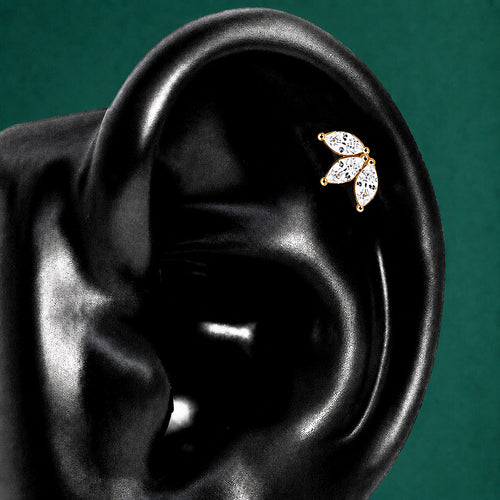
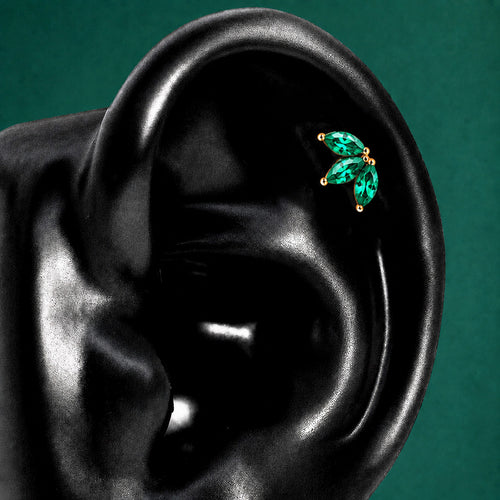
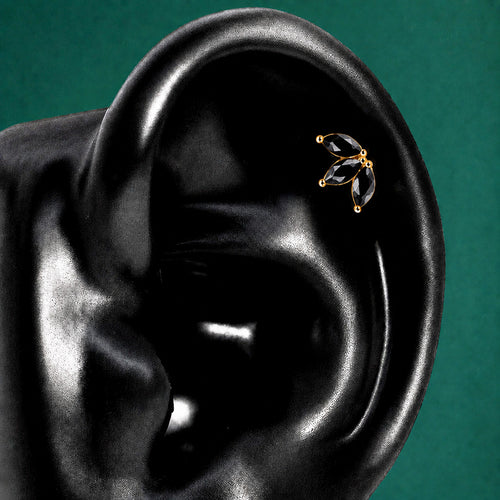
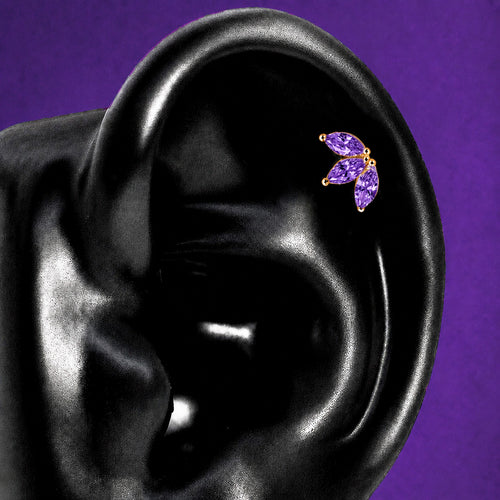
Bloom, shown earlier, illustrates a compact flat-back shape. Limitless uses traditional hoops instead. Neither the closure nor the color should be used as a shortcut for identifying the underlying metal.
A flat back is not a blanket sleep-safety promise
A correctly fitted, low-profile stud may feel comfortable in a healed piercing, but avoid direct pressure on healing cartilage. Large hoops and dangling details can catch, so assess the entire design before overnight wear.
When building your everyday combination, compare the fit of individual pieces in our titanium earrings range and earring stacks collection.
Why Skin Safety Matters Every Single Day
Nickel allergy can develop through sensitization to nickel exposure. Earrings and their backs can be sources of contact, which is why the composition of every skin-contact component matters for everyday wear.
Daily wear risk
- Some stainless steels, white-gold alloys and plated pieces contain nickel; their exact composition and nickel release vary.
- A worn coating can expose a base metal that does not suit your skin.
- Repeated contact with an allergen can cause problems, but there is no simple count of wearing days that predicts an individual's reaction.
Why titanium is different
- Implant-grade titanium is valued for biocompatibility and corrosion resistance.
- Its stable oxide film helps protect the underlying metal; it is not proof that all ion transfer or irritation is impossible.
- A documented material standard such as ASTM F136 is more informative than a generic “titanium” label.
- Comfort still depends on finish, fit, pressure, cleanliness and whether the piercing has healed.
Persistent itching, a recurring rash or discomfort deserves assessment rather than a promise that a change of metal will fix everything. A dermatologist can assess a possible allergy, while a professional piercer can check the jewelry's fit.
A styling match is not a material match
A drop hoop can complement a titanium stack without necessarily using the same metal. Confirm the composition of each component before choosing a decorative pair for a titanium-only routine.
For healed lobes, Luminary - No.1 offers a more decorative shape to consider alongside smaller studs or hoops. Its drop adds a focal point without giving every piercing the same amount of detail.

Luminary - No.1
- SetOne pair of drop hoop earrings
- ClosureTraditional hoops
- LookGem-set hoops with statement drops
Let the pear-shaped drop shown here lead a healed-lobe look, with simpler pieces beside it. Confirm the current metal specification before choosing this pair for a titanium-only stack.
View Luminary - No.1How Titanium Earrings Compare for Daily Wear
Use this comparison to weigh the same practical factors: scratches, weight, upkeep and skin contact. The complete design and your own tolerance matter more than a universal comfort or safety rating.
Everyday wear
4 materials| Metal | Scratch resistance | Weight comfort | Maintenance required | Skin reaction risk |
|---|---|---|---|---|
| Implant-Grade Titanium | Strong base material; surface finishes can still mark. | Low density; assess the whole earring's size and weight. | Low-maintenance; clean gently and follow care guidance for the finish. | Often chosen for sensitive ears; not a guarantee against irritation. |
| Sterling Silver | Can develop surface marks; alloy and finish matter. | Denser than titanium; small designs can still feel comfortable. | Can tarnish; use cleaning suited to the piece and any coating. | Depends on alloy ingredients and individual sensitivity. |
| 14K Gold | Varies with alloy and processing. | Denser than titanium; do not apply pure-gold weight ratios to every 14K piece. | Care depends on the alloy, finish and settings. | Alloy-dependent; some white gold contains nickel. |
| Surgical Steel (316L) | Depends on processing and surface finish. | Denser than titanium; design still affects comfort. | Generally corrosion-resistant; clean and follow product guidance. | Contains nickel. “Surgical steel” alone does not confirm suitability for a sensitive or healing piercing. |
Key Takeaways
- Titanium's low density makes it a useful starting point for lightweight everyday earrings and stacks.
- Strength supports durable design, but posts, settings and clasps still need gentle handling.
- The protective oxide film helps resist corrosion; it does not make the complete earring maintenance-free.
- Flat-back studs offer a lower-profile backing, but comfort still depends on fit and placement.
- Check the metal of every skin-contact component, especially when nickel sensitivity is a concern.
- Scratch resistance and coating durability are separate from the base metal's corrosion resistance.
- Use product-care guidance and activity-specific judgment for showers, workouts and overnight wear.
Frequently Asked Questions About Titanium Earrings for Everyday Wear
Can I sleep in titanium earrings every night?
For healed piercings, a well-fitted, low-profile stud may feel comfortable overnight. Titanium alone does not make a large hoop or dangling design suitable for sleep. Avoid direct pressure on healing cartilage, and ask your piercer about fit rather than assuming a flat back prevents every source of discomfort.
Will titanium earrings scratch or look worn after daily use?
Fine marks are possible, especially after abrasive contact. The titanium base resists corrosion, but a gold or rhodium finish can wear differently from the metal underneath. Gentle handling, non-abrasive cleaning and storage that prevents pieces rubbing together help preserve the appearance.
Do titanium earrings need to be removed before working out?
It depends on the activity, the design and whether the piercing is healed. Sweat resistance does not remove the risk of a hoop catching or equipment pressing on an earring. Follow any sport-specific rules; for healing piercings, avoid jostling and get advice before changing jewelry.
Are titanium earrings comfortable in multiple piercings simultaneously?
They can be. The lower-density base metal can reduce the weight of equivalent designs, but stones, pendants, spacing and fit still affect the complete stack. Build around comfortable pieces rather than filling every piercing at once.
How long do titanium earrings last compared to silver or gold-plated?
There is no reliable universal lifespan for either. Titanium's corrosion resistance is a material advantage, but longevity also depends on the finish, construction, use and care. Well-cared-for silver can last too, and a plated finish may eventually need attention. Check the condition of the complete piece and follow its care instructions.
What makes flat-back titanium different from regular push-back earrings?
A flat back uses a smooth disc behind the ear rather than a butterfly clutch. Threadless versions secure through a push-pin connection. That lower-profile shape can feel more comfortable, but the correct post length remains important. Check the metal separately: a flat-back closure is not proof that an earring is titanium.
Find the Earrings You Reach for Every Day
Start with the material and fit, then choose the shapes that make your stack feel like you. Explore titanium earrings for the piercings you already have.
Explore IMBER titanium earrings- Two-year warranty
- 100-day returns
- 4.9/5 on Trustpilot