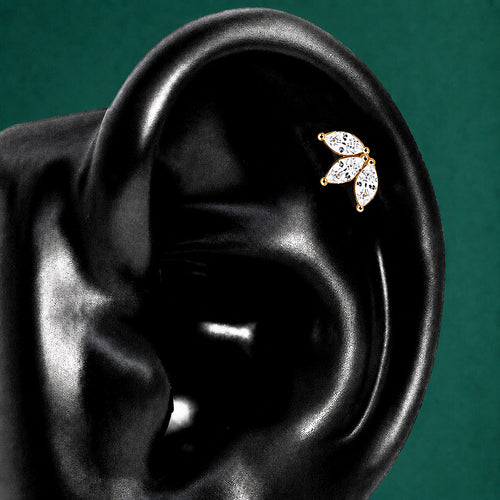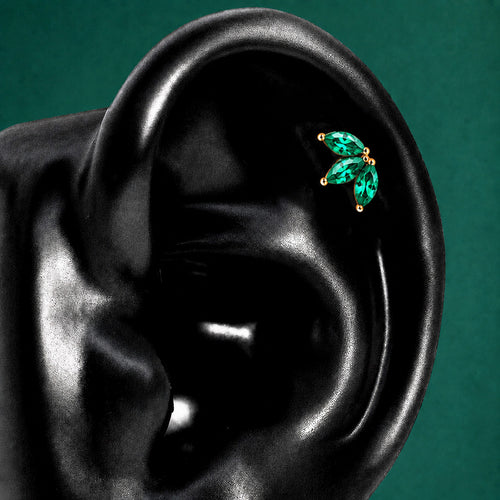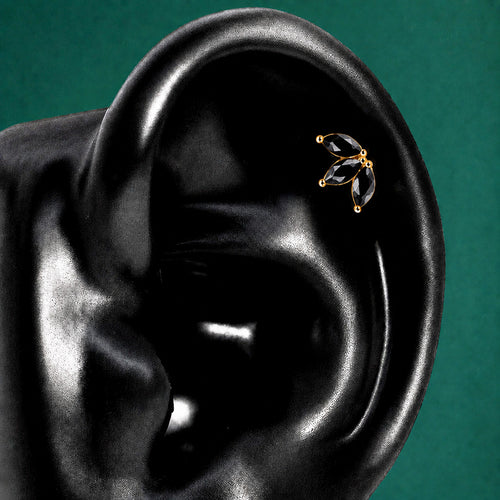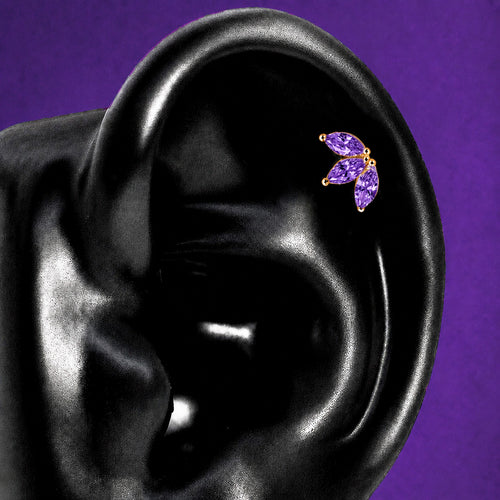

Best Earrings for Newly Pierced Ears: Expert Guide to Safe, Elegant Healing
Quick Answer
The best earrings for newly pierced ears are small, flat‑back studs made from implant‑grade titanium, because they keep the piercing stable, minimise friction, and sharply reduce the chance of irritation while the channel forms. They work exceptionally well as starter earrings for fresh piercings, behaving more like tiny, biocompatible implants than fashion jewellery, so your ears can heal with fewer setbacks.

What Newly Pierced Ears Actually Need
A new piercing is a controlled wound that your body is trying to seal around the earring post. In the first months, the “tunnel” of tissue is fragile and easily disrupted.
To heal well, a new piercing needs earrings that:
- stay still instead of swinging or twisting
- don’t react with sweat, skincare, or shampoo
- sit comfortably 24/7, including during sleep
This is why the best earrings for new piercings are usually simple, precise, and low‑profile—not dramatic, heavy, or complex.
Why Implant‑Grade Titanium Stands Out
Implant‑grade titanium is the gold standard for titanium earrings for new piercings because it is engineered for long‑term contact with the body. It’s the same class of material used in medical implants, chosen because the body generally “ignores” it instead of treating it as a problem.
For newly pierced ears, that translates to:
-
Exceptionally skin‑friendly
Nickel‑free and highly biocompatible, it’s a top choice for hypoallergenic earrings for healing ears and anyone who has reacted to other metals.
-
Low weight, less pull
Titanium is significantly lighter than many metals, so even slightly larger designs won’t drag on tender tissue. This is crucial for flat back earrings for new piercings you’ll wear all day and night.
-
Stable at the surface
It forms a tight, protective oxide layer that resists corrosion from sweat, water, and skincare—ideal for earrings that won’t irritate new piercings even with daily wear.
By comparison, other alloys can work, but implant‑grade titanium earrings offer a more stable and predictable healing experience, making it the safest and most dependable choice for newly pierced ears.
Safest Metals for New Ear Piercings
When you’re choosing earrings for fresh piercings, think in terms of risk levels rather than trend levels. Some metals introduce more unknowns than others.
Top‑tier options (best for fresh piercings)
- Implant‑grade titanium (e.g., ASTM F136)
Ideal for starter earrings for fresh piercings due to its consistent performance with sensitive skin, low weight, and excellent surface stability.
- High‑karat, nickel‑free solid gold (14k–18k)
Can be suitable in new piercings when it’s truly nickel‑free and solid (not plated). However, it’s softer than titanium and more prone to tiny bends or scratches that can rub inside the channel, so it’s usually better once you’ve already healed well in titanium.
Use with caution (better for healed ears)
- Stainless/“surgical” steel
Only specific, medical‑grade steels are ideal long term; many mass‑market “surgical steel” pieces still contain nickel. They may be acceptable for some people but are less predictable for the safest earrings for new piercings. - Sterling silver
Beautiful, but more prone to tarnish and surface change. Best reserved for fully healed piercings, not for first‑stage healing.
In short: you can absolutely enjoy gold, silver, and other metals later. For the early phase, implant‑grade titanium gives you the cleanest, least reactive starting point.
Ideal Earring Designs for Fresh Piercings
The best earrings for newly pierced ears combine the right metal with the right mechanics. Even perfect material can cause issues if the design moves too much or digs in.
Flat‑back studs: the most forgiving shape
Flat‑back labret studs are leading options for earrings for healing ear piercings because they:
- sit flush against the back of the ear instead of poking or pinching
- keep the post straight through the piercing, limiting rotation and rocking
- are easier to sleep in than butterfly backs or bulky hoop closures

When you think about what earrings to wear after piercing, imagine something you could accidentally sleep in every night without drama—that’s the role flat‑back titanium studs are built for.
Size, length, and profile
For new piercings, look for:
- Small, low‑profile fronts
Tiny discs or refined stones that don’t stick far out from the ear reduce the chance of snagging and torque.
- Appropriate post length
Slightly extra length at first allows for swelling, then a planned downsize with your piercer makes the earring more compact and stable later.
- Smooth edges and settings
High‑polish surfaces and secure stone settings minimise friction and catching at the entry point.
These details make flat back earrings for new piercings feel unobtrusive, which is exactly what healing tissue needs.
How to Choose Earrings That Won’t Irritate New Piercings
If you want earrings that won’t irritate new piercings, you can run each option through a simple checklist:
-
Material
Is it implant‑grade titanium or another well‑documented, nickel‑free alloy suitable for new piercings? If the material isn’t clearly specified, skip it for now.
-
Design
Is it a small, stable stud (ideally a flat back), or is it a hoop/dangle that might swing, twist, or catch? For new piercings, stillness beats drama.
-
Weight
Does it feel light in the hand? Heavy earrings amplify every movement and put extra stress on healing tissue. Titanium wins here again.
-
Lifestyle
Will you be showering, working out, or sleeping in these every day? If yes, waterproof, tarnish‑resistant titanium is far better than plated or easily reactive metals.

This decision process makes it easier to choose the best earrings for new piercings without overthinking every single product detail.
Building a Long‑Term, Low‑Irritation Ear Stack
New piercings are just the first chapter of your ear stack. With a bit of planning, your “healing phase” pieces can become the long‑term foundation of a refined, minimalist stack.
A smart approach:
- Start every new piercing with implant‑grade titanium flat‑backs so you know you’re giving the tissue its best chance.
- Keep your initial look simple—a small set of matching studs that already feel like your everyday signature, not throwaway “starter jewellery.”
- Once healed, layer in tiny hoops, huggies, and delicate chains around those anchor studs, using them as your stable base.
This approach balances elegance and practicality: you’re not just buying “healing jewellery,” you’re investing in the core of an ear you’ll enjoy styling for years.

Best Starting Strategies for New Piercings
| Stage | Setup | Best For | Note |
|---|---|---|---|
| Start | Titanium studs | Beginners | Safest option |
| Early style | Stud + small hoop | Some flexibility | Add hoops later |
| Upgrade | Titanium → gold | Known tolerance | Higher care |
| Advanced | Mixed metals | Healed piercings | Avoid early |
This table helps readers match their expectations (max comfort vs early styling) to a realistic, safe plan.
Key Takeaways
- Choose implant‑grade titanium flat‑back studs as your default for new piercings and healing ear piercings.
- Prioritise stability, low weight, and smooth surfaces over trend‑driven designs.
- Use other metals (gold, steel, silver) later, once the piercing is fully mature and less reactive.
FAQ: Best Earrings for Newly Pierced Ears
What earrings are best for newly pierced ears?
For most people, the best earrings for newly pierced ears are small implant‑grade titanium flat‑back studs. They combine a safe, low‑reactivity metal with a stable design that won’t twist or catch easily, which is exactly what fresh piercings need while the channel forms. Once healing is well underway, you can gradually transition into more decorative options.
Are titanium earrings safe for new piercings?
Yes—high‑quality, implant‑grade titanium is one of the safest options for new ear piercings. It’s designed to be tolerated inside the body for long periods, is free of nickel, and doesn’t break down easily in sweat, shower water, or everyday environments. That’s why so many piercers favour titanium earrings for new piercings and recommend keeping them in through the full initial healing window.
Which metal is safest for ear piercings?
For new piercings, implant‑grade titanium is generally the safest and most predictable choice. High‑karat, nickel‑free solid gold can also be suitable for some people once they know their tolerance. For maximum consistency—especially if you’ve had reactions before—starting with titanium and only experimenting with other metals after healing is complete is the most conservative route.
Can I wear hoops or dangles right after piercing?
It’s usually better to avoid hoops and dangling styles in the early stages. They move more, catch more easily, and can twist the jewellery through the piercing channel, which increases irritation and slows healing. If you love hoops, treat them as a later reward: begin with stable studs, then ask your piercer when it’s safe to switch to small, snug hoops in safe metals.
How long should I keep my first earrings in before changing them?
Lobe piercings often need at least 6–8 weeks of uninterrupted wear before changing jewellery is considered, and cartilage can take several months or longer. Even then, the first swap should be to another safe, stable design—not heavy hoops or statement pieces. Always follow your piercer’s timeframe and pay attention to your body’s signals (no tenderness, swelling, or weeping).
What are the best earrings for sensitive ears that are newly pierced?
If your ears are sensitive, focus on implant‑grade titanium or confirmed nickel‑free high‑karat solid gold, with smooth, high‑polish surfaces and flat‑back or secure stud designs. Avoid vague “hypoallergenic” labels that don’t name the metal. Titanium flat‑back studs are an especially strong choice, as they minimise both chemical triggers and mechanical stress while the piercing is vulnerable.
What earrings should I wear after my piercing has mostly healed?
After the main healing window, many people move to slightly more expressive styles: small hoops, huggies, and delicate drops in titanium or solid gold. It’s smart to keep at least one pair of reliable titanium studs as your “reset set” for days when your ears feel irritated or after trying new metals, so you can quickly return to a low‑reaction baseline.