
Why Earrings Cause Allergic Reactions And How Titanium Stops The Itch
Quick Answer
Itchy ears after wearing earrings can be a sign of metal allergy, often to nickel. Pressure, friction and infection can cause symptoms too. Implant-grade titanium earrings are a useful nickel-free option, but no metal guarantees that every wearer will remain reaction-free.
Why a Favorite Pair Can Suddenly Feel Uncomfortable
An earring can look beautiful and still leave your ears unhappy by lunchtime. The important question is what is touching your skin: the post, the back and the parts resting against the ear all count.
Sometimes the problem is the alloy. Sometimes a tight back, a heavy pendant or a rough edge is doing the irritating. Understanding that difference makes it easier to choose your next pair without giving up the style you love.
-
Metal contact
Check the post and back, not just the decorative front.
-
Fit and pressure
Give the ear room. A back should not pinch the lobe.
-
Daily habits
Notice friction, moisture and products collecting around the jewelry.
Nickel: The Small Ingredient Behind a Big Reaction
Nickel is a common cause of allergic contact dermatitis. If you are sensitized to it, contact can bring itching, redness, swelling or a dry, scaly rash. The reaction may appear after a delay rather than the moment you put the earrings in.
A pair you have worn for years is not automatically ruled out. Sensitivity can develop over time, and a coating can wear enough to expose a different underlying metal. A dermatologist can use patch testing to investigate a suspected metal allergy.
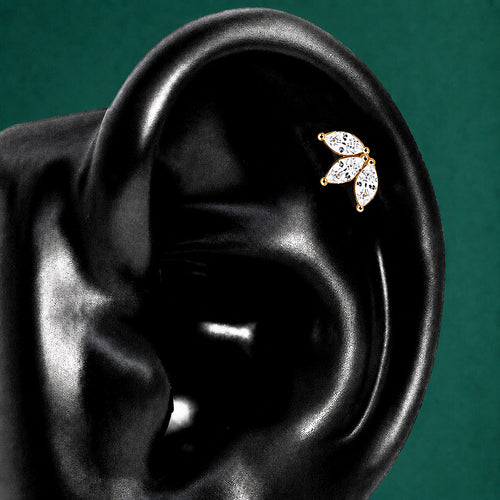
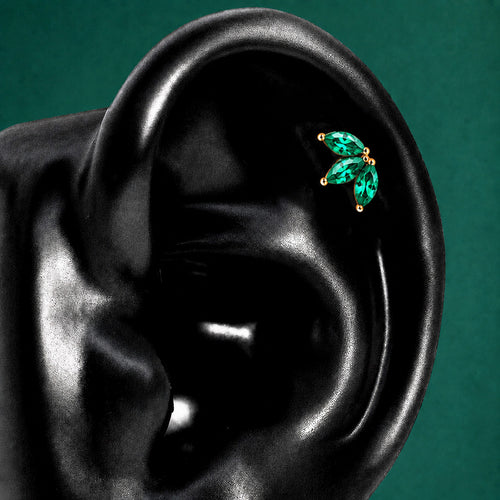
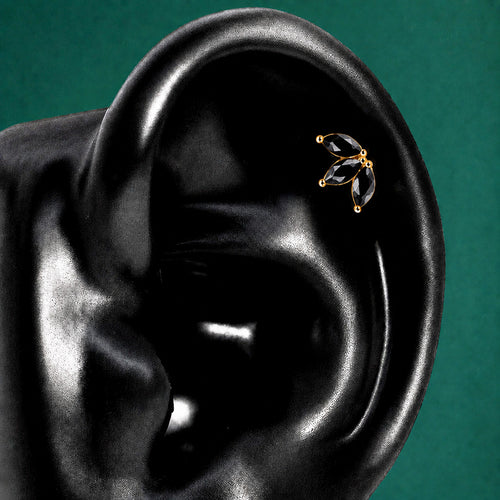
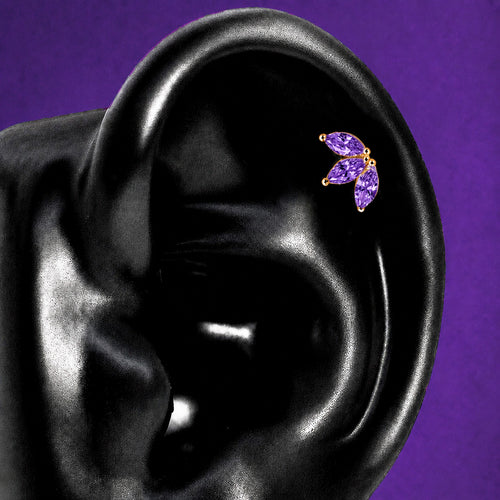
A gold color does not identify the base metal. Seraphic offers the statement look in titanium, illustrating why the material description is more useful than color alone.

What Other Earring Materials Mean for Sensitive Ears
The name of a metal is a starting point. The exact alloy and every skin-contact component tell you more. Tarnish and allergy are also different things: a darkened surface does not diagnose an allergic reaction.
Common choices
5 options| Material | What to check | Sensitive-ear consideration |
|---|---|---|
| Implant-grade titanium | Recognized material standard; post and back | A strong nickel-free starting point. |
| Stainless steel | Exact grade and nickel content | “Surgical” alone does not establish suitability. |
| Solid gold | Karat and complete alloy | Nickel-free formulations may suit some wearers. |
| Sterling silver | Alloy, finish and skin-contact parts | Tolerance varies; unsuitable for initial piercings. |
| Plated / costume jewelry | Base metal and coating condition | A coating may expose the alloy as it wears. |
For new piercings, suitable initial jewelry is a separate decision. Your piercer should assess the material standard, finish, size and construction; an everyday fashion description does not establish suitability.
Why Implant-Grade Titanium Is Worth Considering
Titanium combines a light feel with strong corrosion resistance. Recognized implant-grade specifications, such as ASTM F136 or ASTM F67, identify material requirements more clearly than a vague “skin-friendly” label.
This makes titanium useful when nickel is the concern. It still needs a smooth finish and an appropriate fit, and it cannot cure a rash or remove pressure from a too-tight earring.
When you want both studs and hoops in an established stack, choosing a set with a clearly stated base material simplifies the search. Reverence brings those shapes together without making every piercing wear the same silhouette.

Reverence Earring Stack
- MaterialImplant-grade titanium
- FinishGold
- SetTen earrings
Flat-back pieces and hoops give you different ways to build a coordinated titanium look. Select the pieces and sizes that suit your established piercings.
View ReverenceWhat to Do When Your Ears React
Look at the timing and location of the symptoms, then get advice if the cause is unclear. Itching and a recurring rash can suggest allergy; soreness from a tight closure can suggest pressure. Neither pattern is a reliable diagnosis on its own.
For a fully healed piercing, avoiding a suspected trigger may help while you seek advice. Do not repeatedly test an uncomfortable pair against already irritated skin. If the piercing is new, ask your piercer before changing jewelry.
Keep jewelry care and piercing aftercare separate. Household polish, alcohol and improvised cleaning mixtures belong nowhere near an irritated piercing channel.
The connected shapes in Elysian - Pear are a reminder to think about movement as well as metal. A chain should have enough room between the piercings it joins.

Small Habits That Make Everyday Wear Easier
Start with the parts you feel
Choose smooth posts and closures with enough room for your anatomy. Check a flat back’s post length or a hoop’s diameter rather than assuming one size fits every placement.
Keep buildup in check
For healed piercings, clean jewelry according to its finish and stones, then dry it well. For a healing piercing, follow the aftercare plan from your piercer.
Give the ear a lighter day
If a design pulls, catches or presses while you sleep, reconsider it for that activity. Titanium can reduce weight, but a long pendant can still tug.
A graduated look can still feel considered and light. In Limitless, different hoop sizes create the shape of the stack; the fit of each piece should decide where you wear it.

Build a Stack Around Comfort First
Begin with one well-fitting piece in an established piercing. Once your skin is comfortable, add another shape and notice how the two sit together. There is no need to fill every piercing to make a stack look finished.
For a hoop-led look, Solace lets you alternate solid and gem details while keeping the titanium foundation consistent. Start with the pieces you will enjoy wearing all day, then add a pendant when the occasion calls for it.

Solace Earring Stack
- MaterialImplant-grade titanium
- FinishGold
- SetEight hoops
Eight hoops combine solid, gem and spike details. Wear a small edit for everyday comfort, or build out the stack across suitable established piercings.
View SolaceKey Takeaways
- Check the post, back and every part touching the ear.
- Treat a metal label as information, not an allergy guarantee.
- Balance a compatible material with smooth, comfortable fit.
- Seek advice for recurring rash or signs of infection.
Frequently Asked Questions About Ear Piercings
Why do my ears suddenly react to earrings I’ve worn for years?
Sensitivity can develop after repeated exposure, or a worn coating can reveal the base metal. Pressure, skincare products and infection are other possibilities. A recurring reaction deserves a professional assessment.
Which metals are safest for sensitive ears?
Recognized implant-grade titanium is a useful nickel-free option. Niobium and suitable nickel-free precious-metal alloys may also work. Your specific sensitivities and the complete piece matter.
Are “hypoallergenic” or “nickel-free” earrings always safe?
No. These descriptions do not guarantee a reaction-free experience. Check the precise materials of the post and back, and remember that fit and friction can irritate the ear independently of allergy.
How can I tell if it’s an allergy or irritation from the design?
Timing, itching and recurring rash can offer clues, while pressure often causes localized soreness. Symptoms overlap, so do not rely on this distinction to diagnose yourself. A clinician can investigate.
Is titanium better than stainless steel for sensitive ears?
If nickel is the trigger, documented implant-grade titanium is generally a simpler choice because many steel alloys contain nickel. The label “stainless” alone does not tell you the grade or skin compatibility.
How does titanium compare to gold for everyday earrings?
Titanium is light and corrosion-resistant. Gold can suit sensitive ears when its alloy is compatible with the wearer, but karat and color alone do not establish that it is nickel-free.
Can waterproof earrings still cause allergic reactions?
Yes. Water resistance describes the jewelry’s response to water, not your immune response or the fit. Check the skin-contact materials even when a pair is described as waterproof.
Find Your Comfortable Everyday Pair
Explore titanium designs, then choose the shapes and dimensions that suit your established piercings.
Explore titanium earrings- Two-year warranty
- 100-day returns
- 4.9/5 on Trustpilot